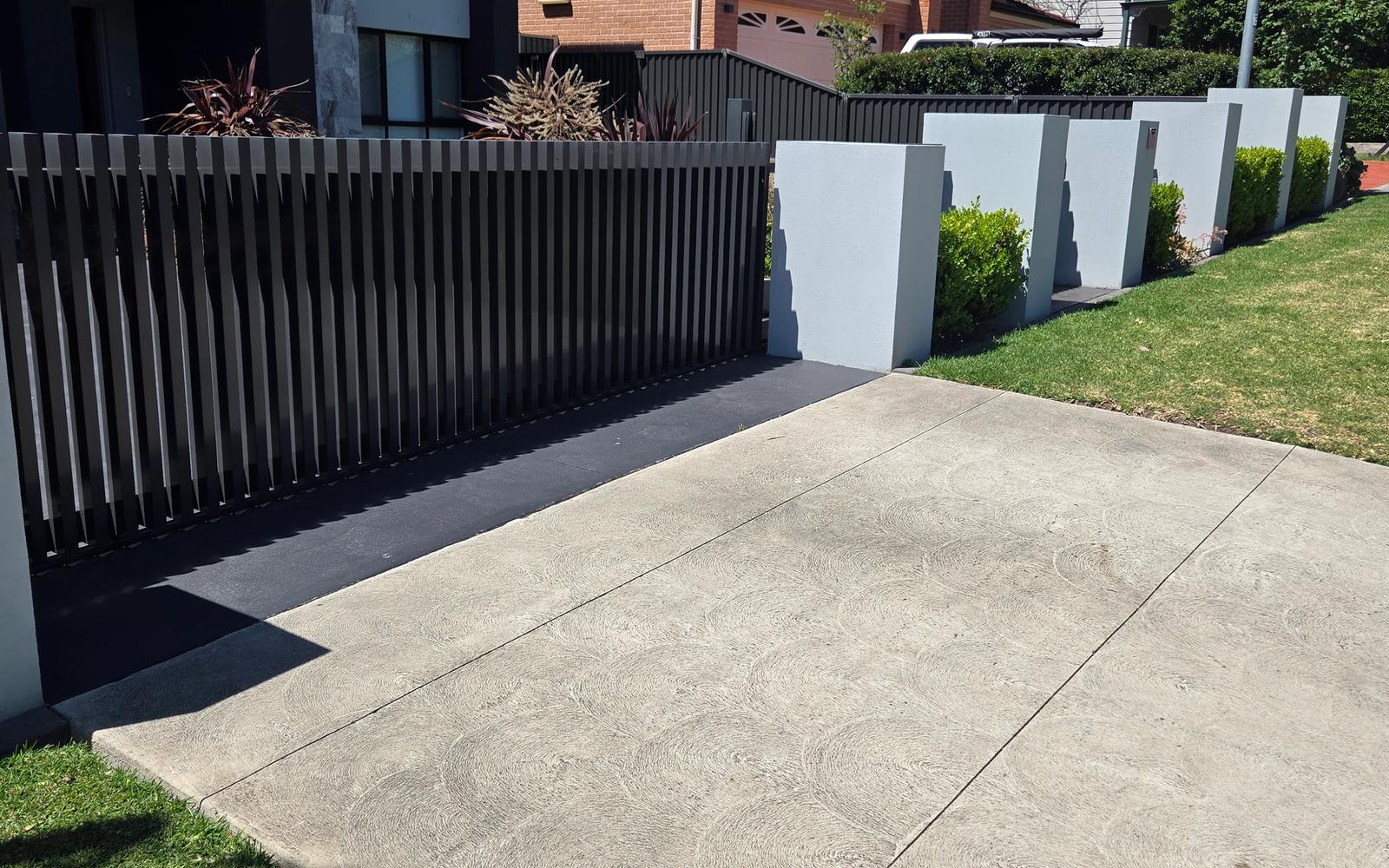
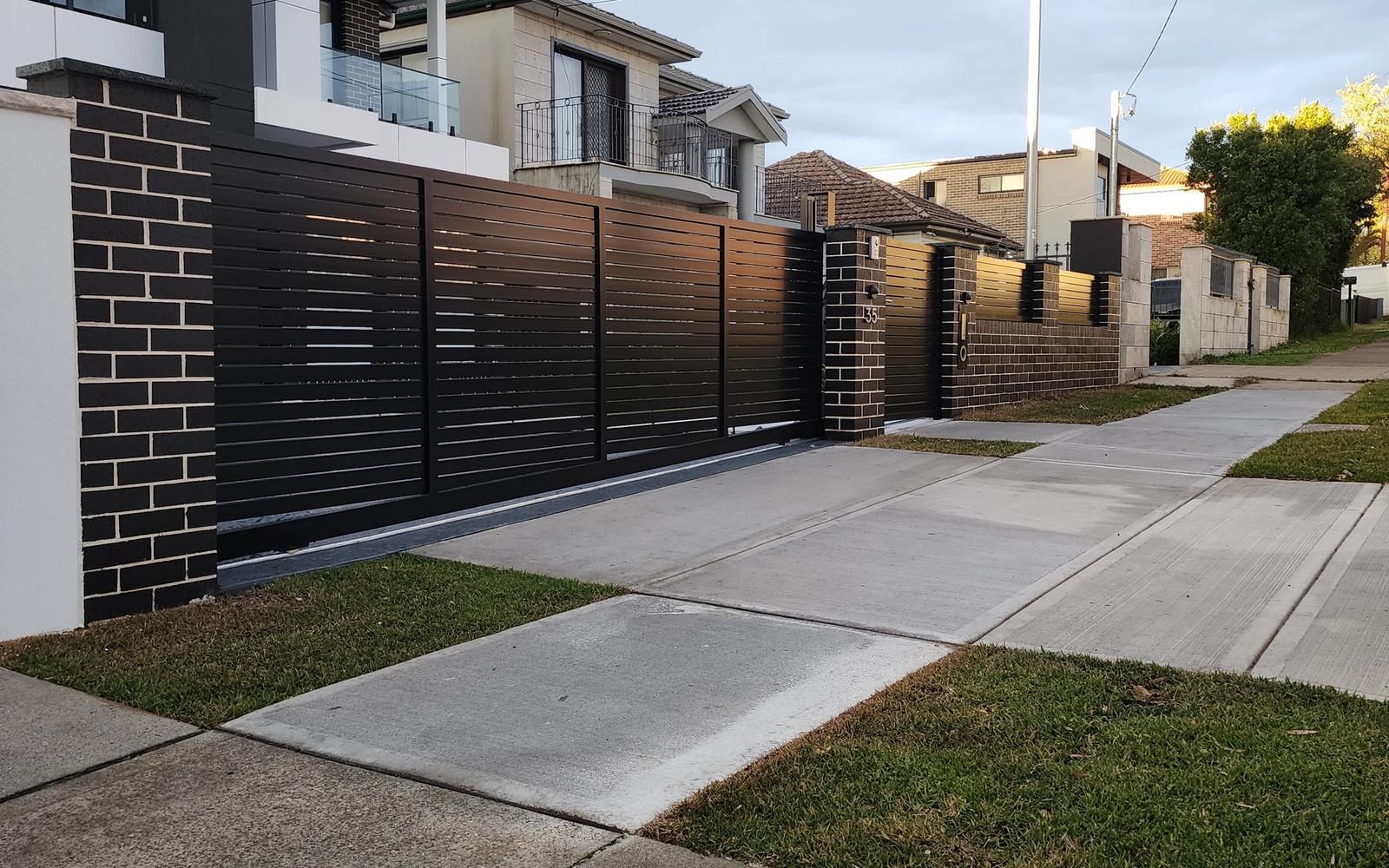
Sliding vs swing gates: which fits your driveway?
A sliding gate needs clear space beside the driveway to travel into. A swing gate needs room for its hinged panels to open. Compare those spaces with your normal parking and access before settling on either.
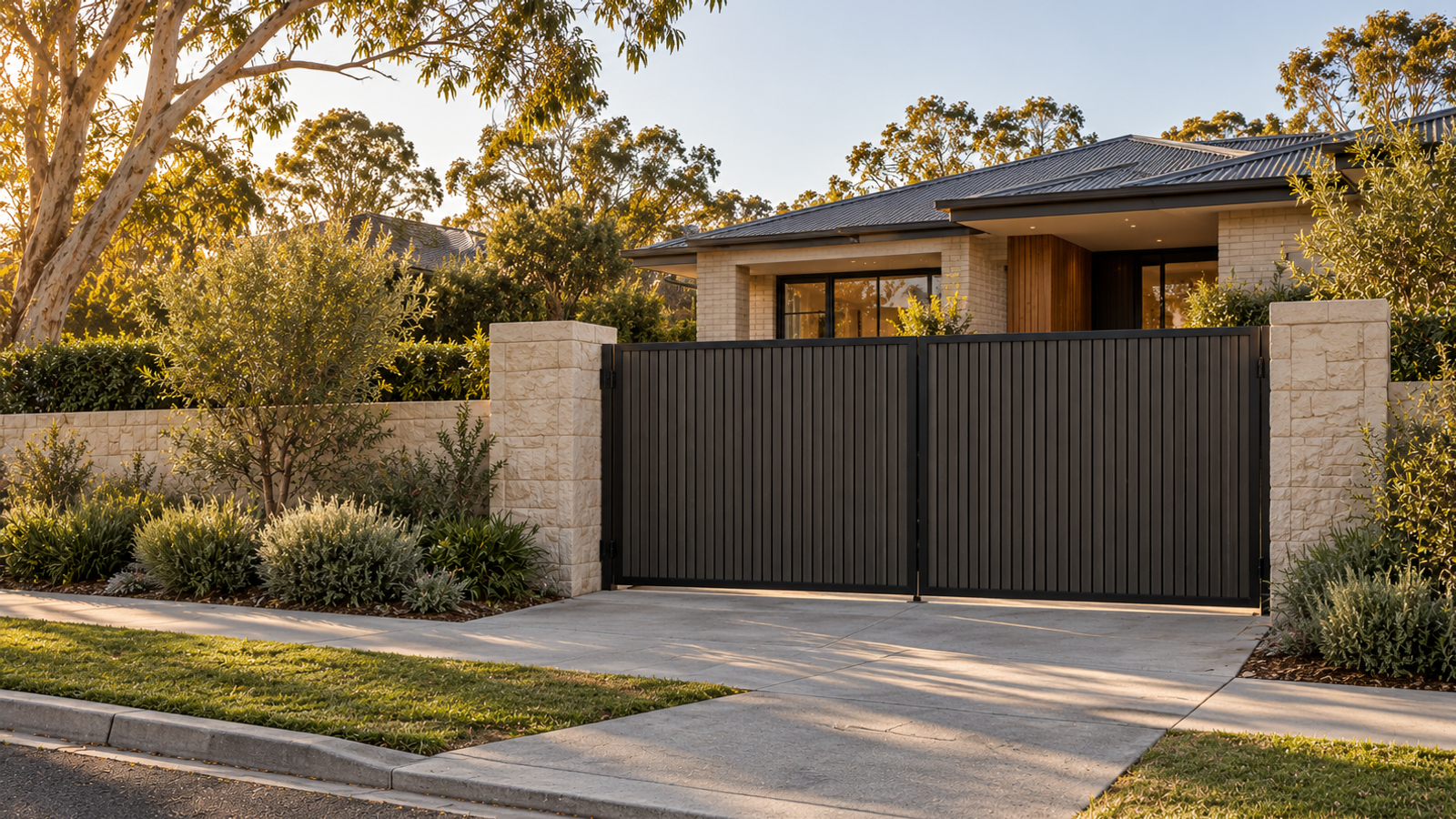
If you already prefer sliding or swing, use that as your starting point. The next step is checking how it would work at your entrance, including where the gate goes when you open it.
Sliding gates: look beyond the driveway opening
A sliding gate moves sideways along the boundary. The opening your car passes through and the space the gate slides into are different parts of the layout.
The side space is often called the run-back. It needs to accommodate the selected gate when open, along with the equipment and supports that arrangement requires.
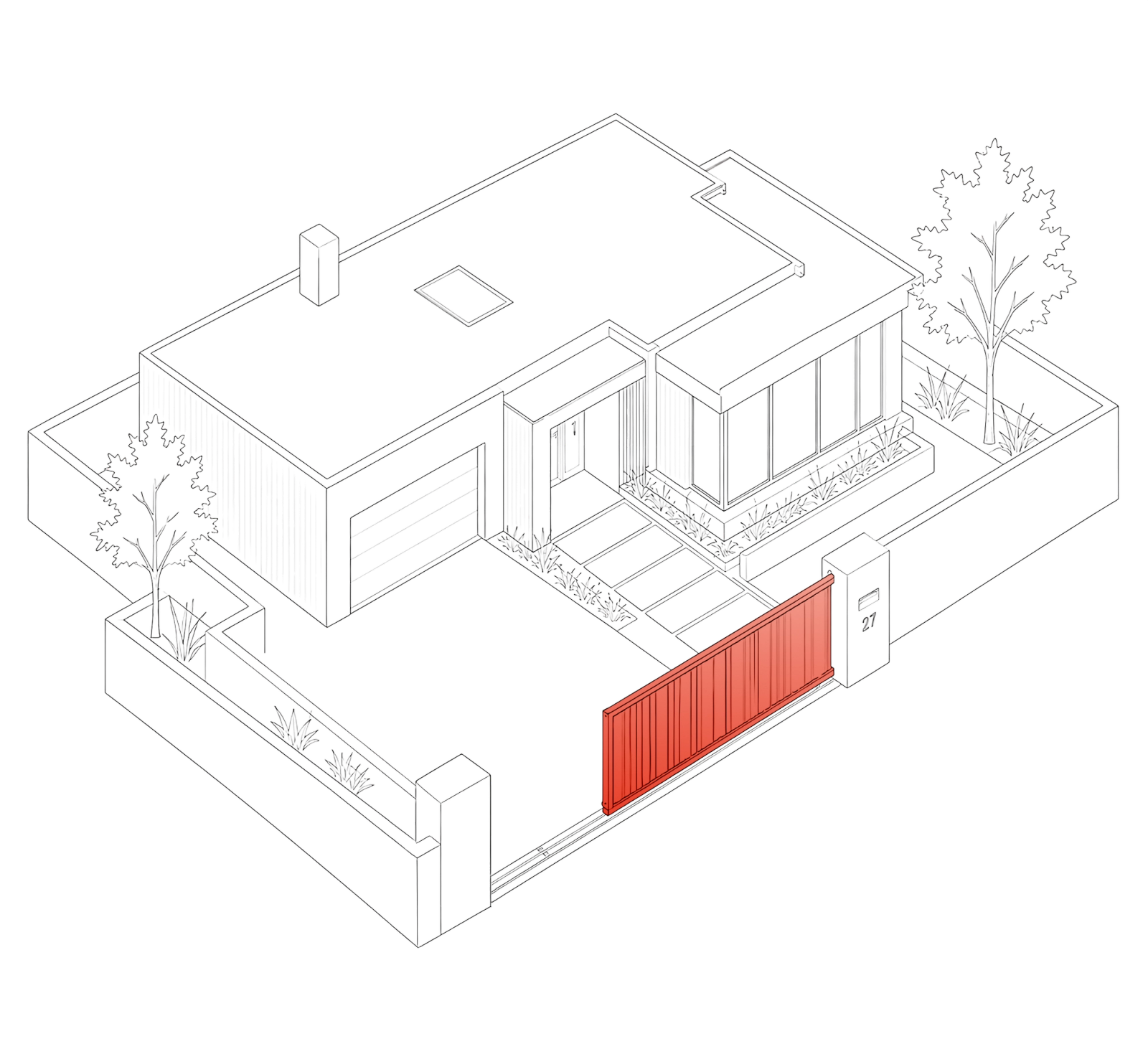
Look along that side of the entrance. A wall, garden bed or separate pedestrian gate can affect the space available. Tell us what you want to keep so it is included in the assessment.
If a parked car would occupy a swing gate's path, investigate sliding movement first. That only helps if the side area can accommodate the proposed sliding arrangement.
Clear space and installation readiness are separate questions, too. Some sliding layouts need concrete support beside the driveway, even when there is space for the gate to open. Have that requirement assessed before arranging concrete work.
Opening width alone will not confirm the gate fits. The complete travel, stored position and support arrangement need checking together.
Swing gates: include the car in its normal position
A swing gate rotates on hinges. Each moving panel is called a leaf: a single swing gate has one, while a double swing gate has two.
The leaves need room throughout their movement. Looking only at the space they occupy when fully open can miss a conflict partway through the opening.
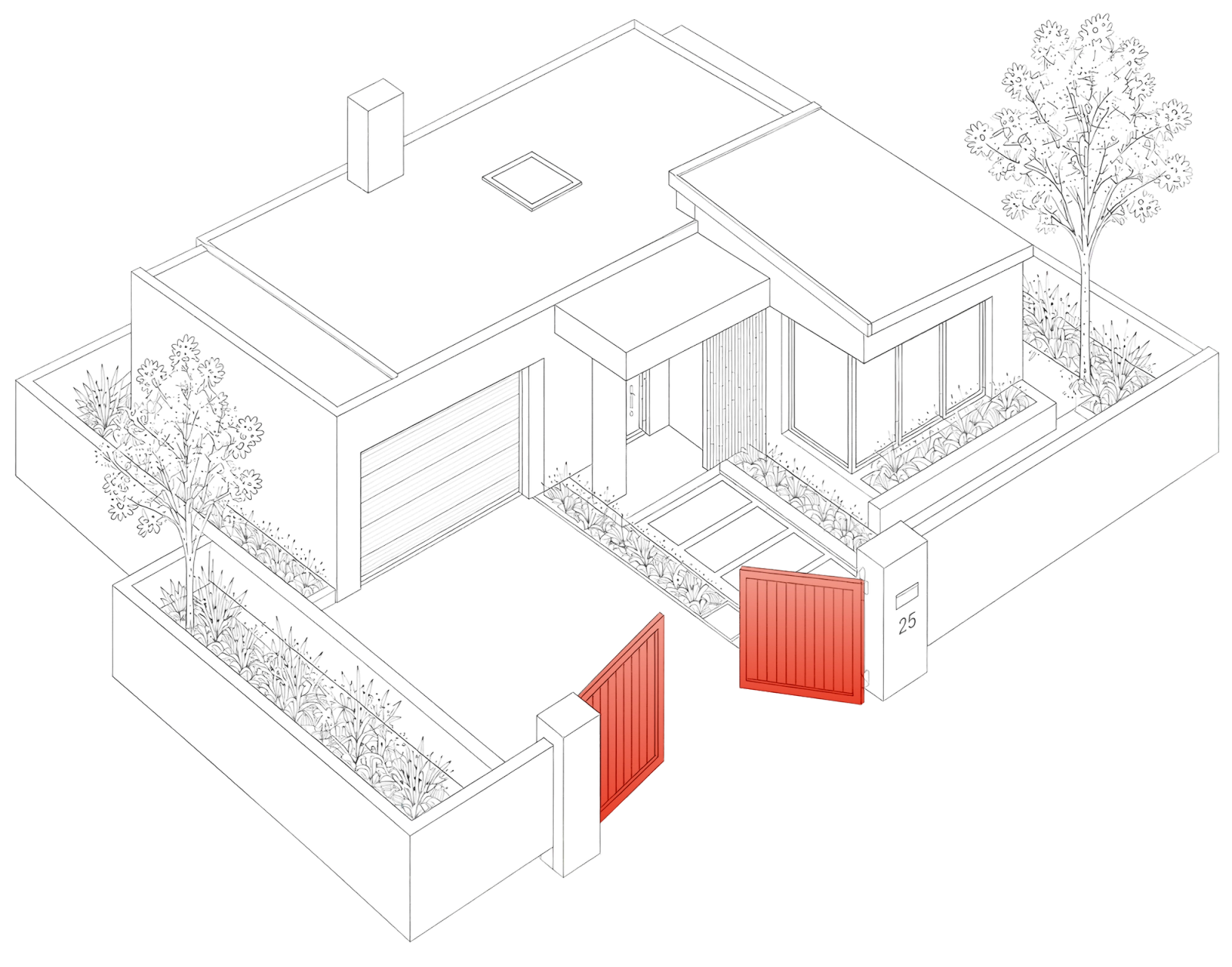
Consider the driveway with the car where you normally park it. If an inward-opening leaf would move through that position, the parking arrangement and proposed movement conflict.
Decide whether you want to keep that parking position before treating a different parking spot as the solution. A gate arrangement needs to be assessed against the way you intend to use the driveway.
Two leaves change the movement, but do not remove the need to check it. Each leaf's path and resting position still matter.
Include the route people take to the front door or pedestrian entrance. That route needs consideration alongside vehicle parking and the moving gate.
Have the proposed opening direction and ground levels checked on site. An empty, level-looking entrance or a photograph of another gate cannot settle those details for your property.
If the side space is too short
A telescopic gate uses sliding panels that overlap as they open. This can reduce the straight side space needed compared with a conventional single-panel sliding gate.
The overlapping panels also need depth. A shorter run along the fence is only one part of the layout.
The open stack is deeper because several panels sit in front of one another.
Ask to see where the full stack of open panels would sit, including that depth. A general space-saving claim is not enough to confirm the arrangement fits.
If neither ordinary sliding nor swing looks straightforward, leave the configuration open for assessment. The useful starting point is the space you need to preserve and the restrictions that need resolving.
Check the gate closed, moving and open
A simple sketch can help you explain the layout. Include your normal parking positions and the existing features you want to retain, then consider each stage:
- With the gate closed, mark the vehicle opening and any separate entrance on foot. Show the posts, walls and garden areas around them.
- While it moves, consider the whole path beside the parked cars and walking route. Follow each hinged leaf for swing, or the sideways travel for sliding.
- When fully open, consider where the gate sits. Include the side storage for sliding or the resting position of each swing leaf.
Beside a potential conflict, note what you want to keep, what you could change and what needs advice. A parking position you must keep presents a different decision from a garden bed you are willing to move.
You are explaining how the entrance needs to work. Exact clearances, supports and safe operation still require professional assessment.
Bring the layout questions to an assessment
Bring your preferred movement, normal parking arrangement and the features you want to keep. Photos can help show the entrance and side space if you have them.
We can check the measurements, levels, supports and proposed automation against the actual property.
See our custom automatic gates for the service and gate options, or get in touch to discuss your entrance.