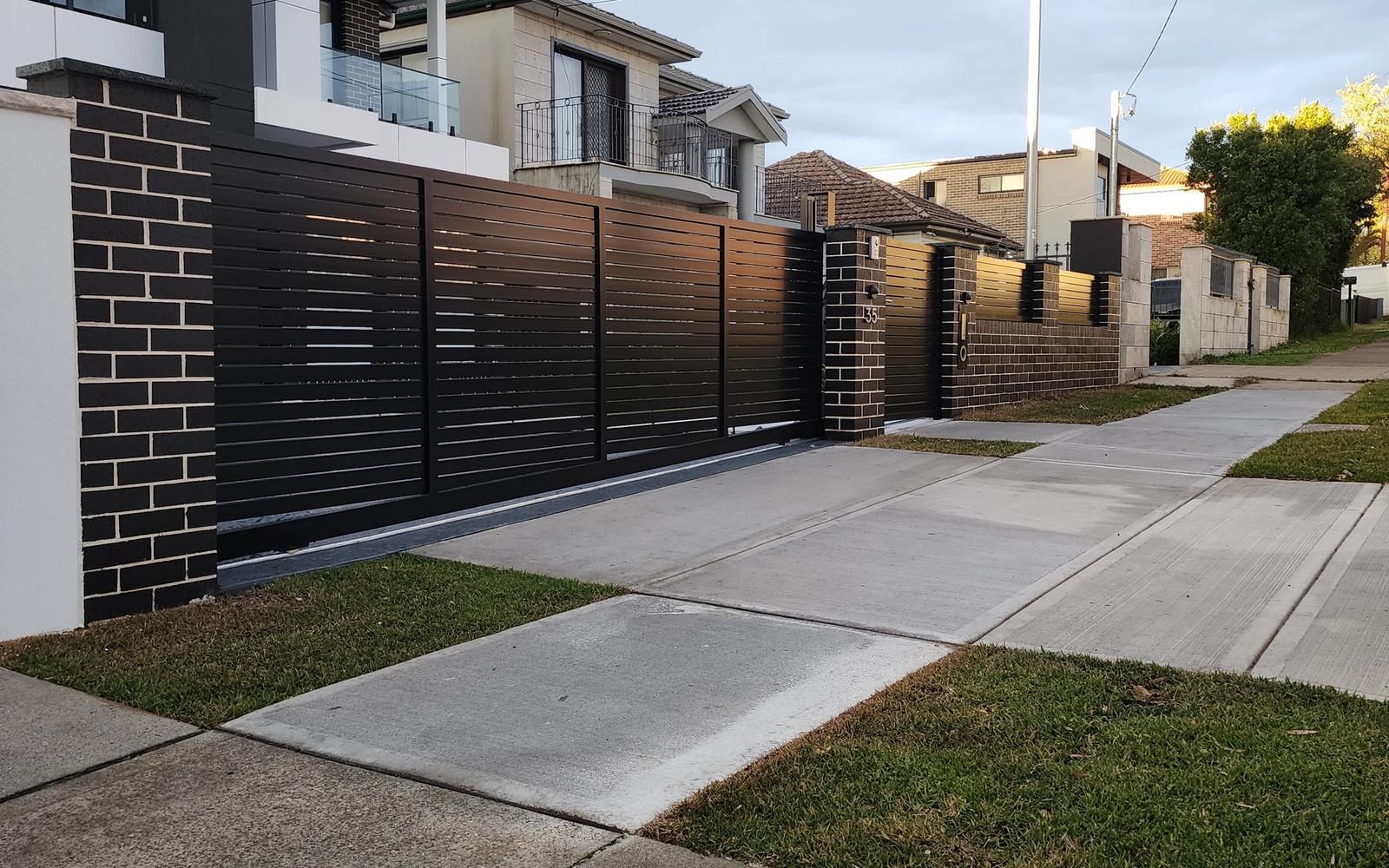
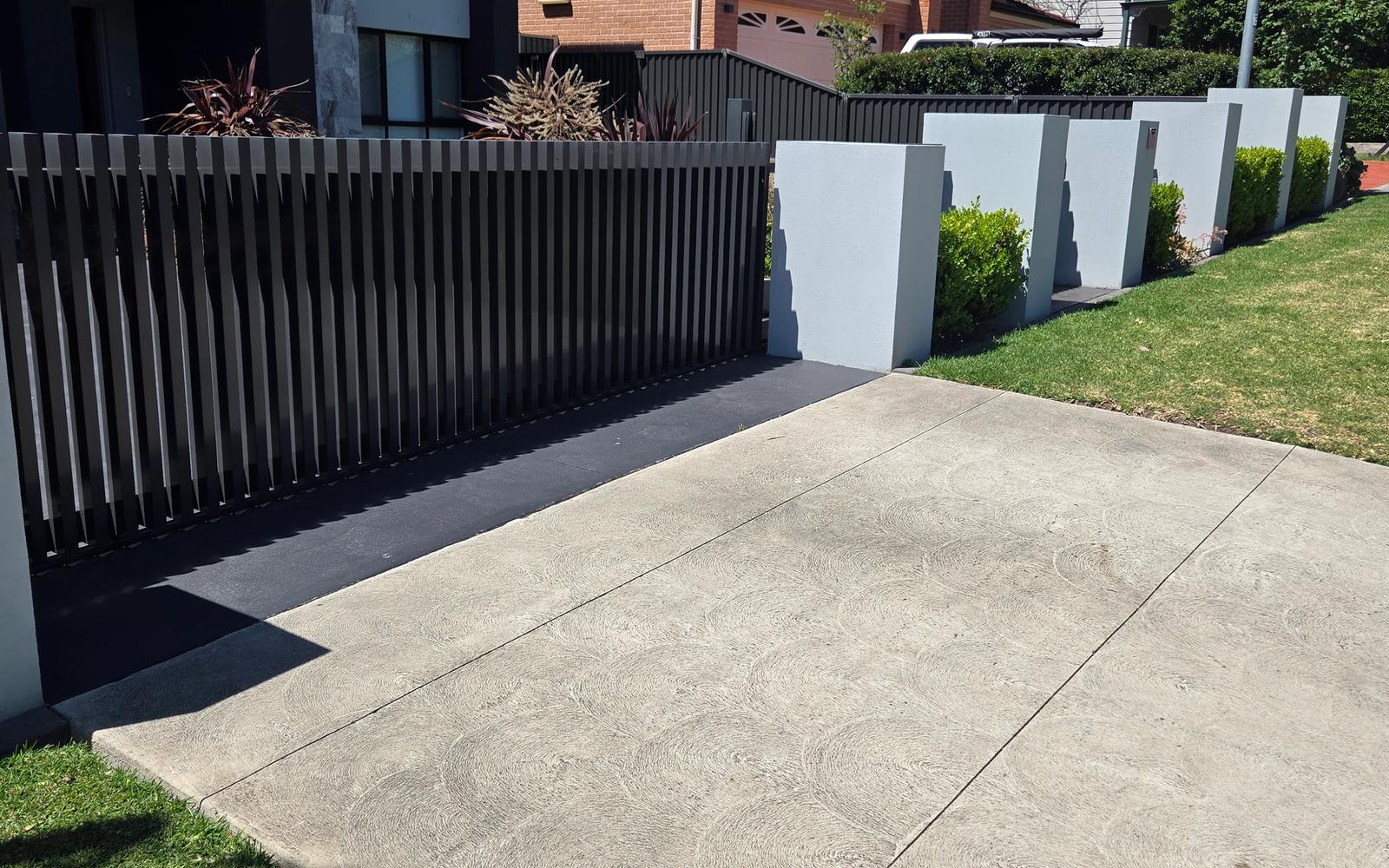
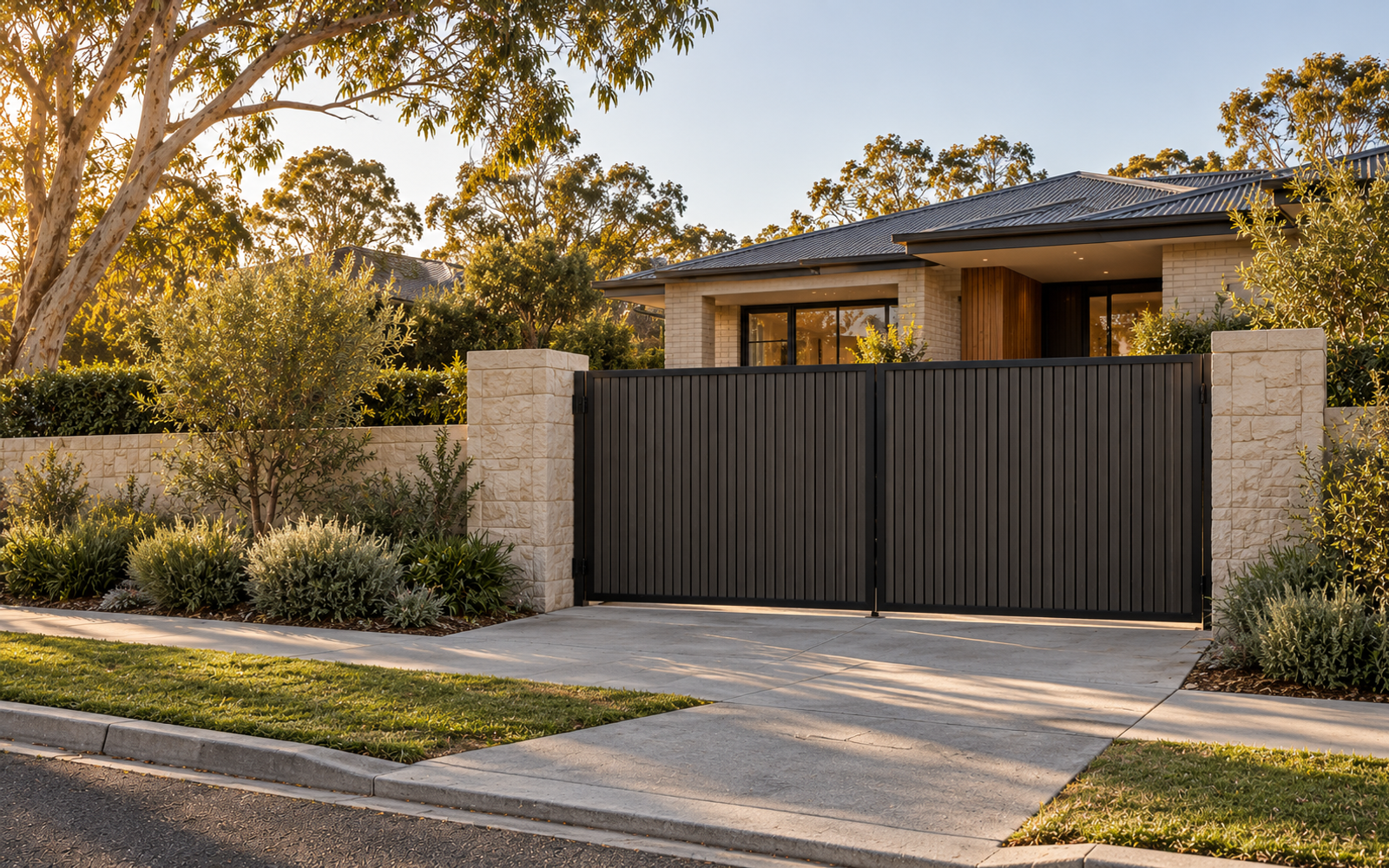
Planning a custom driveway gate and front boundary
Start with what you want to keep, how you use the entrance and the gate you have in mind. Use a site assessment to confirm the layout, then agree on the supporting work and who will arrange it.
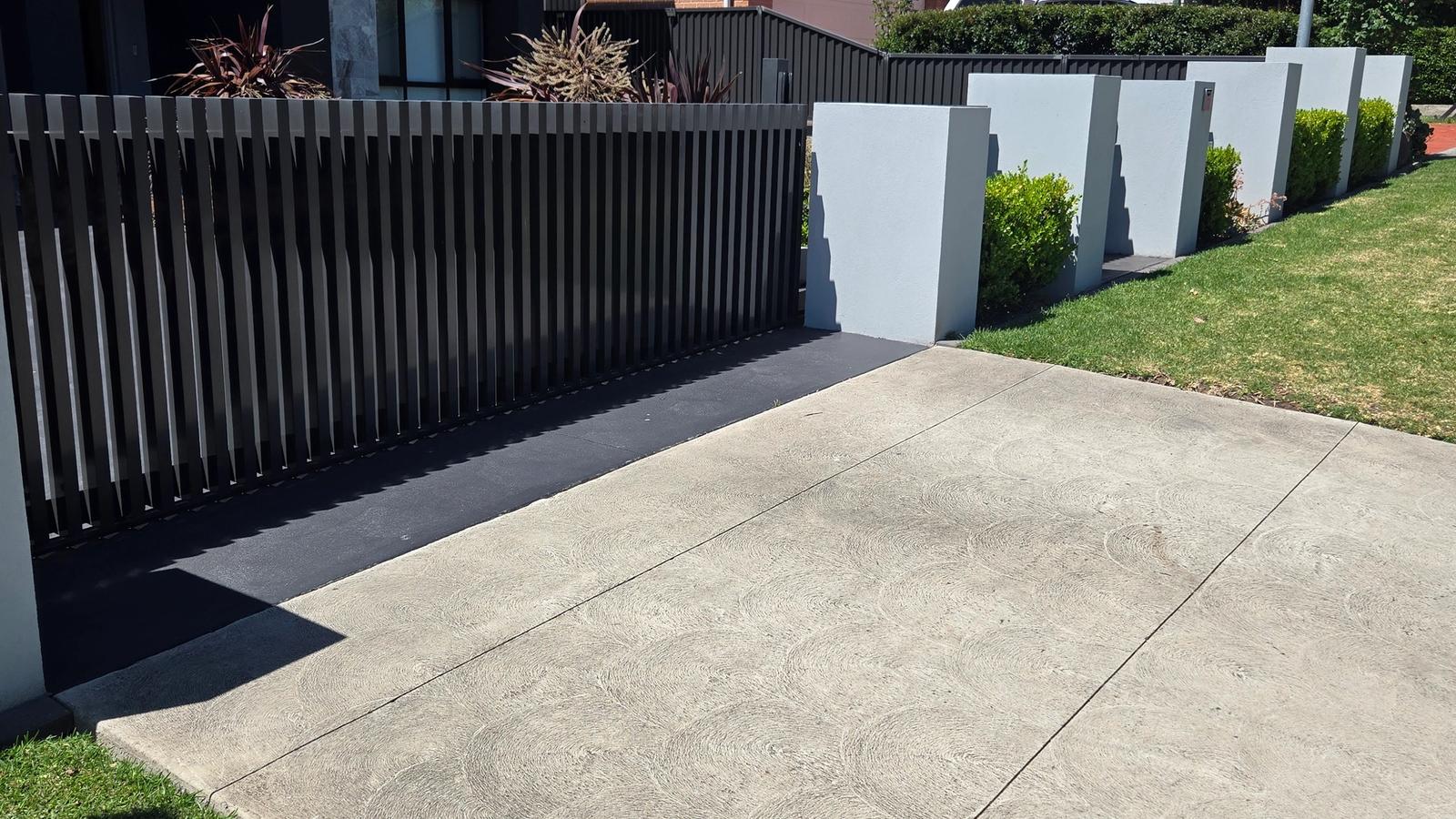
You may already have a sliding gate in mind and a photo of the design you like. The remaining questions can be less obvious: will the existing posts stay, who arranges power, and when should the concreting happen?
Bring those questions to the assessment, along with the preferences you already have.
Decide what stays and what changes
Look at the entrance as it is now. You might want to replace the driveway gate and leave the rest alone. Or the gate may be part of a wider change to the front fence and pedestrian entrance.
Write down what you want to keep, replace or leave open for advice. Include the existing fence, walls or posts, the driveway surface and any separate entrance on foot.
You can ask to retain an existing post, but its suitability for the new gate needs checking.
Think about the reason for the work, too. If privacy is the priority, explain which view you want to screen. If access is the problem, describe how the entrance gets used each day.
A separate pedestrian gate may be useful, but it depends on the property and how you want to enter. Replacing a driveway gate does not automatically mean replacing the whole front boundary.
Separate movement, appearance and construction
A reference picture helps with appearance. It leaves other decisions open, including how the gate moves and what it is made from.
For movement, a sliding gate travels sideways and needs somewhere to sit when open. A swing gate opens on hinges and needs room for its moving panels. Consider the car in its normal parking position, not only an empty driveway. The proposed arrangement still needs a site assessment.
For appearance, identify the part of the reference you like. It might be vertical lines, a particular colour or an open design that lets you see through. That gives us something more useful to work with than trying to reproduce every detail in the picture.
Construction is a separate conversation. In our work, an aluminium gate may use steel support posts where the arrangement requires them. A timber look can also come from a finish on aluminium rather than real timber. Ask what the gate, its supports and its finish will be, rather than assuming the photograph tells you.
You can settle one of these choices before the others. Bring the preference you have; use the assessment to resolve what is still uncertain.
Have the layout assessed before arranging site work
An opening can look ready for a gate while supporting work is still missing.
For example, a proposed tracked sliding gate may have room to open beside the driveway but no suitable concrete support along that area. The opening width alone does not settle the job. The layout and support requirements need assessment before that concrete is arranged.
Power can be another separate task. Tell us what you know about the existing supply and any electrical work already planned. The gate installer and electrician need to agree what the proposed automation requires.
We can coordinate supporting trades, or you can arrange your own contractor. Confirm who is arranging each part before the work is booked.
| What needs agreement | How to settle it |
|---|---|
| Existing walls or posts | Explain what you want to keep. Their suitability needs assessment before they become part of the gate design. |
| Concrete and ground work | Confirm what the assessed layout needs, who arranges it and when it must be ready for installation. |
| Power and wiring | Agree the automation requirements with the gate installer and electrician, including who will arrange the electrical work. |
| Your own contractors | Tell us which trades you have appointed so their work can be coordinated with the gate layout. |
Once the requirements are confirmed, note who will arrange each task and when it needs to be ready. Leave unconfirmed requirements for the relevant person to check.
Raise the gate plan before a new driveway surface is finished. Some double-swing arrangements need a connection between the two sides of the entrance. That connection needs planning with the relevant trades before the concrete is poured.
You do not need to work out the wiring or concrete specification yourself. Describe the property and the work already planned, then have the requirements confirmed before anyone starts that preparation.
Before finalising the design, check which planning requirements apply to your property. The NSW Planning Portal's fences guidance is a starting point; confirm property-specific requirements with your council.
Work out what the budget covers
The gate itself is one part of the job. Automation, access controls and any required supporting work also need to be accounted for.
Use an early budget to explain what you want to spend. A project-specific quote needs the measurements, design and responsibilities understood.
Include work you arrange separately in your overall budget. It still forms part of the project, even if another contractor will quote for it.
Before agreeing to proceed, check what the quote includes and what remains your responsibility. That makes the next step clear without treating a price for one part of the entrance as the price for everything.
Understand what happens after the assessment
We take the site measurements and review the requirements before preparing the quote.
Once the design and quoted work are agreed, fabrication can be scheduled alongside the necessary site preparation. If you are arranging some of that work yourself, agree when it needs to be ready.
After fabrication, we send the gate to a separate provider for powder coating. The colour needs to be confirmed before it goes for coating.
If you are still deciding on colour, raise that early. We can explain when the choice is needed rather than leaving it unresolved as finishing approaches.
Ask for a project schedule once the work is agreed. Check how fabrication, finishing and any work you arrange fit together before installation.
At handover, have the completed gate and its controls demonstrated so you know how to use them. Ask how to arrange future servicing, too.
Bring a useful project summary
A few notes are enough to start the conversation:
- Your property location and whether you are replacing a gate, adding one or changing the wider entrance.
- What you want to keep, what you want to change and what you are unsure about.
- How vehicles and people normally use the entrance, including where cars park.
- Any preferred movement, design reference, colour or material.
- Other work already planned and any contractors you have appointed.
- Any confirmed supporting work, who is arranging it and what still needs checking.
- What you need help deciding, plus any timing you are working towards.
Photos can help show the setting if you have them. You can also leave a detail as unknown and raise it at the assessment.
For our service and gate options, see custom automatic gates. If you are ready to discuss the property, get in touch with what you know so far.