Privacy and access at your front entrance
Plan what the entrance should screen, where people will walk and how they will get in. These choices affect one another: a more private gate does not settle the walking route, and a separate pedestrian gate still needs an entry arrangement.
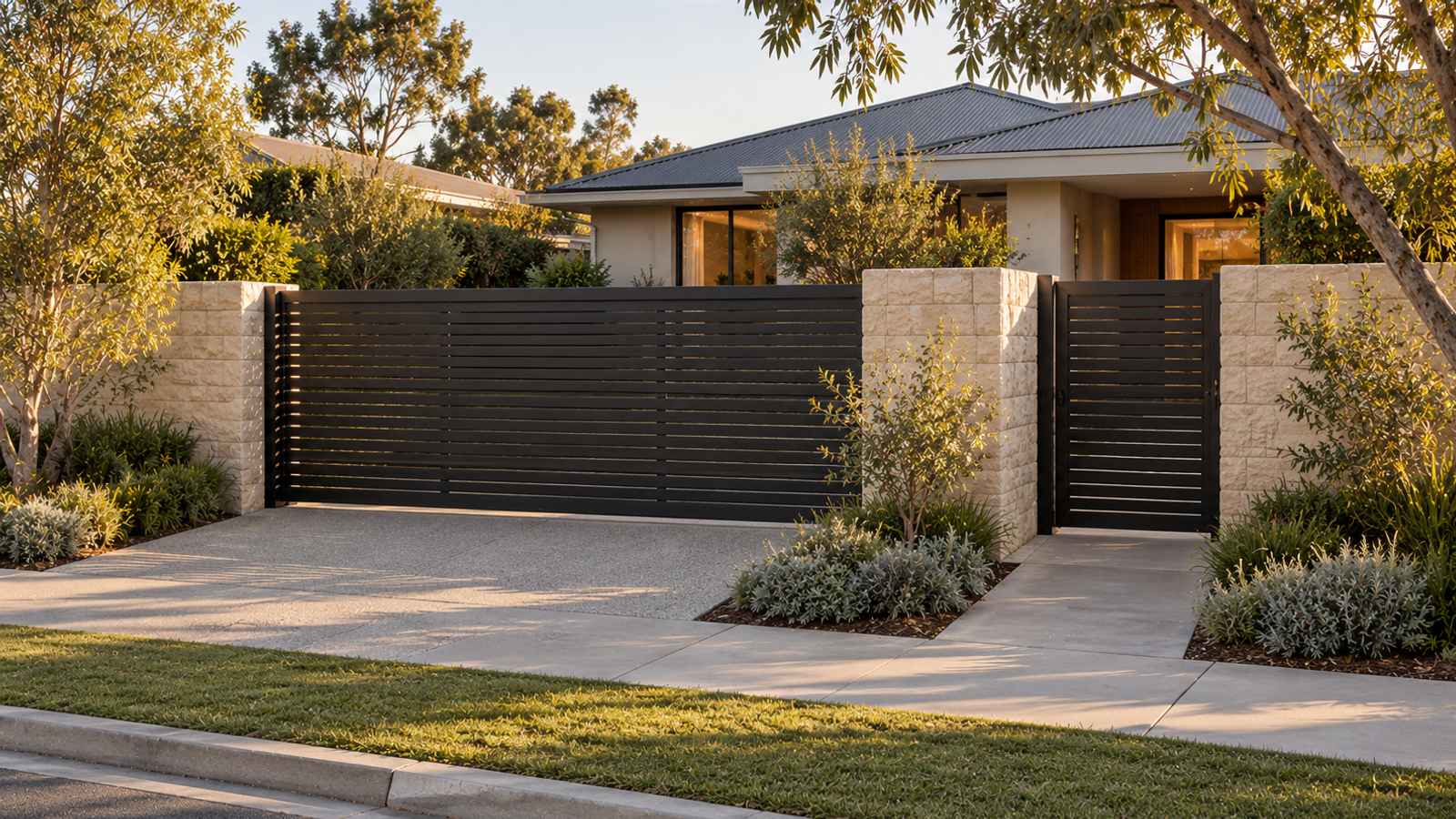
With an existing home, useful parts of the entrance may be able to stay. We assess how a new gate would work alongside them, rather than assuming the whole front boundary needs replacing.
Start with the entrance you already use
You may already have a gate design in mind. Before extending that choice to the whole frontage, separate the change you want from the parts that still work.
An existing pedestrian gate might provide the walking route you need, while the driveway opening leaves more of the yard visible than you want. That points to a screening question at the driveway, with the existing walking entrance included in the assessment.
If access is the reason for the work, identify where it falls short. Having to walk outside to admit visitors is different from needing a new path or opening. A different entry arrangement may be the question to resolve, rather than another gate.
Keep any parts you want to retain in the discussion. Their condition and suitability for the proposed arrangement still need checking.
See how the choices work together
Suppose you want less of the front yard visible from the footpath, want to keep the pedestrian entrance and would like to admit visitors from inside. These are three requirements for the same entrance.
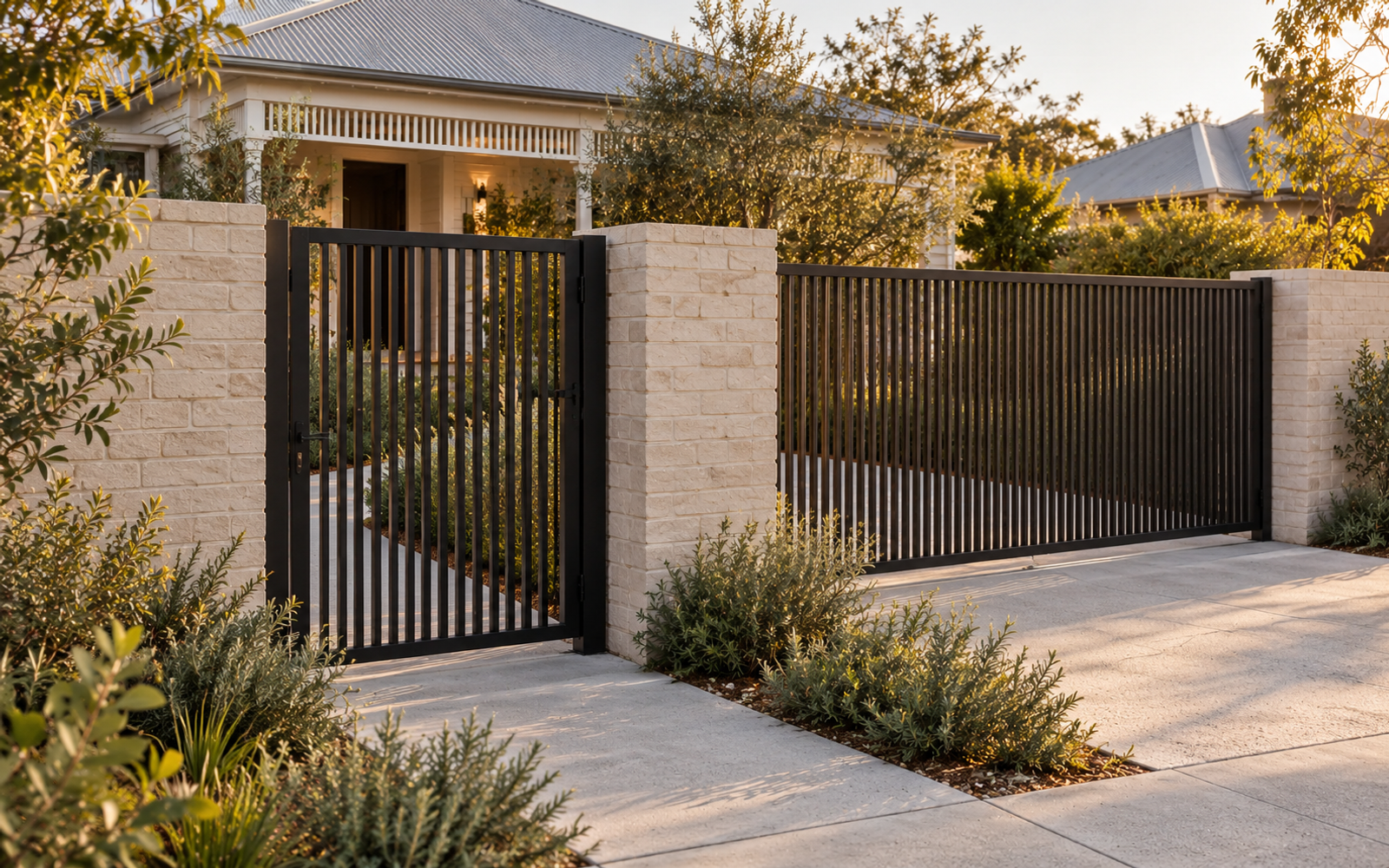
Start by checking whether the view you want screened passes through the driveway opening, the pedestrian gate or both. Screening only the driveway gate would leave the other view unchanged. The existing pedestrian gate might still stay, but the proposed screening needs to account for that opening too.
Then consider the walking route beside the new vehicle gate. Keeping the entrance in the same place does not establish that the new gate can move alongside it. The layout needs checking with the vehicle gate closed, moving and fully open.
If you instead intend to walk through the vehicle opening, have the installer confirm that the actual system permits pedestrian use and suits the layout. A partial-opening setting alone does not establish that.
Finally, decide how residents will enter independently and how visitors will be admitted. Remote latch release can let someone inside admit a visitor while the pedestrian gate is still opened by hand. It does not require the gate panel itself to be motorised.
For our projects, fitting the gate-side electric strike and connecting it are separate jobs. We can fit or replace the strike; its wiring and work inside the house are for the relevant electrician.
Follow the question you still need to answer
Use the guide that resolves the part you are still deciding:
- What should the gate screen? Use driveway gate privacy to compare the view you want reduced with the view you want to keep.
- Where should people walk? Compare driveway gates with pedestrian access before deciding whether the existing route can stay or another opening needs assessment.
- How should people get in? Use pedestrian gate locks and entry to distinguish residents who enter independently from visitors admitted by someone inside.
Describe the entrance you want assessed
Bring the choices together in a short note:
- The view you want reduced, where it comes from and any view out you want to retain.
- Where people should walk, including an existing entrance you want to keep.
- Who needs independent entry and whether visitors should be admitted from inside.
- What should stay, and which parts of the arrangement still need advice.
Leave unknown equipment or construction details for assessment. You can describe the result you want without choosing the hardware yourself.
For the wider project, including supporting work and preparation, use our custom driveway gate planning guide.
When you are ready to discuss the entrance, use the enquiry form on our custom automatic gates page.