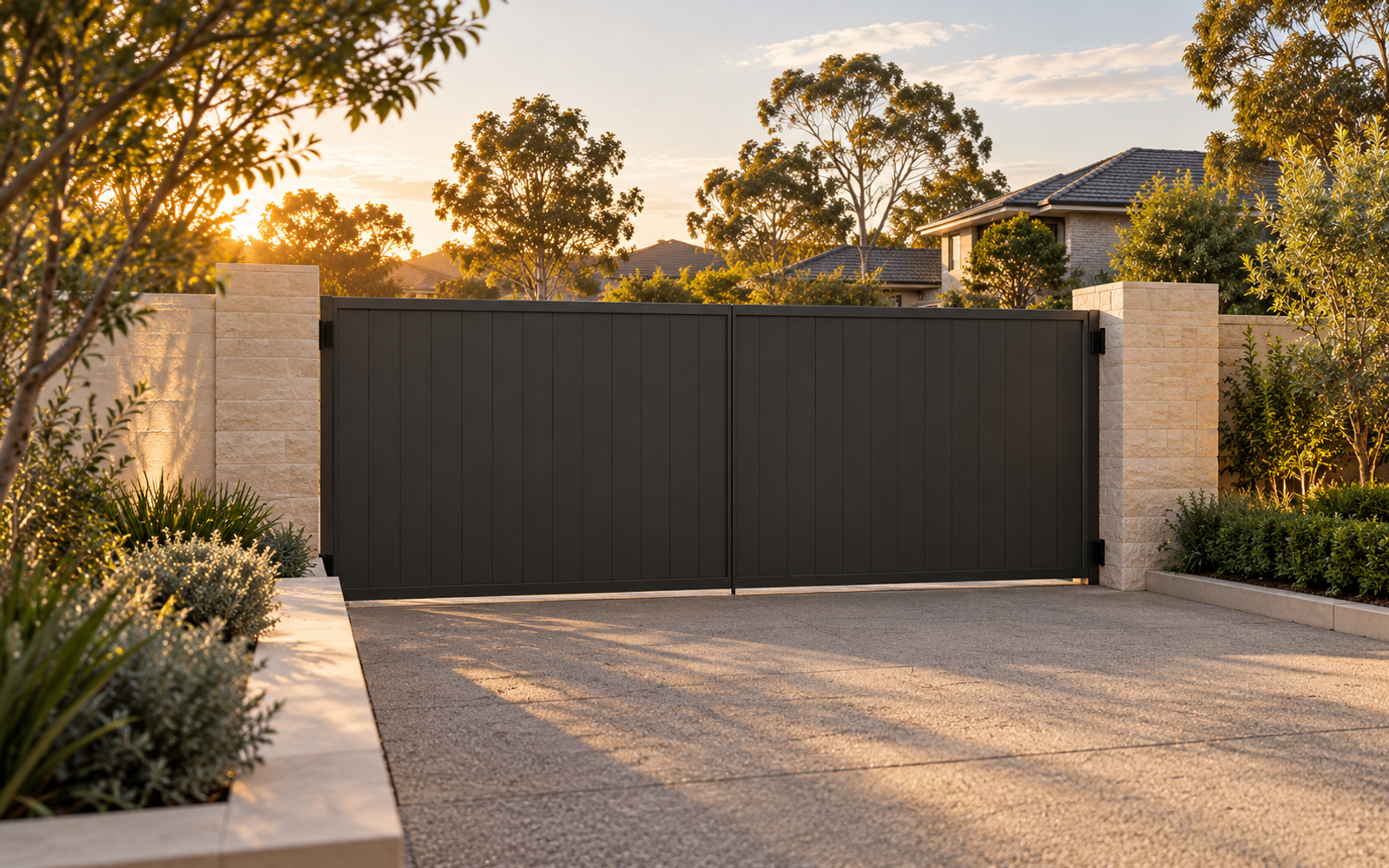
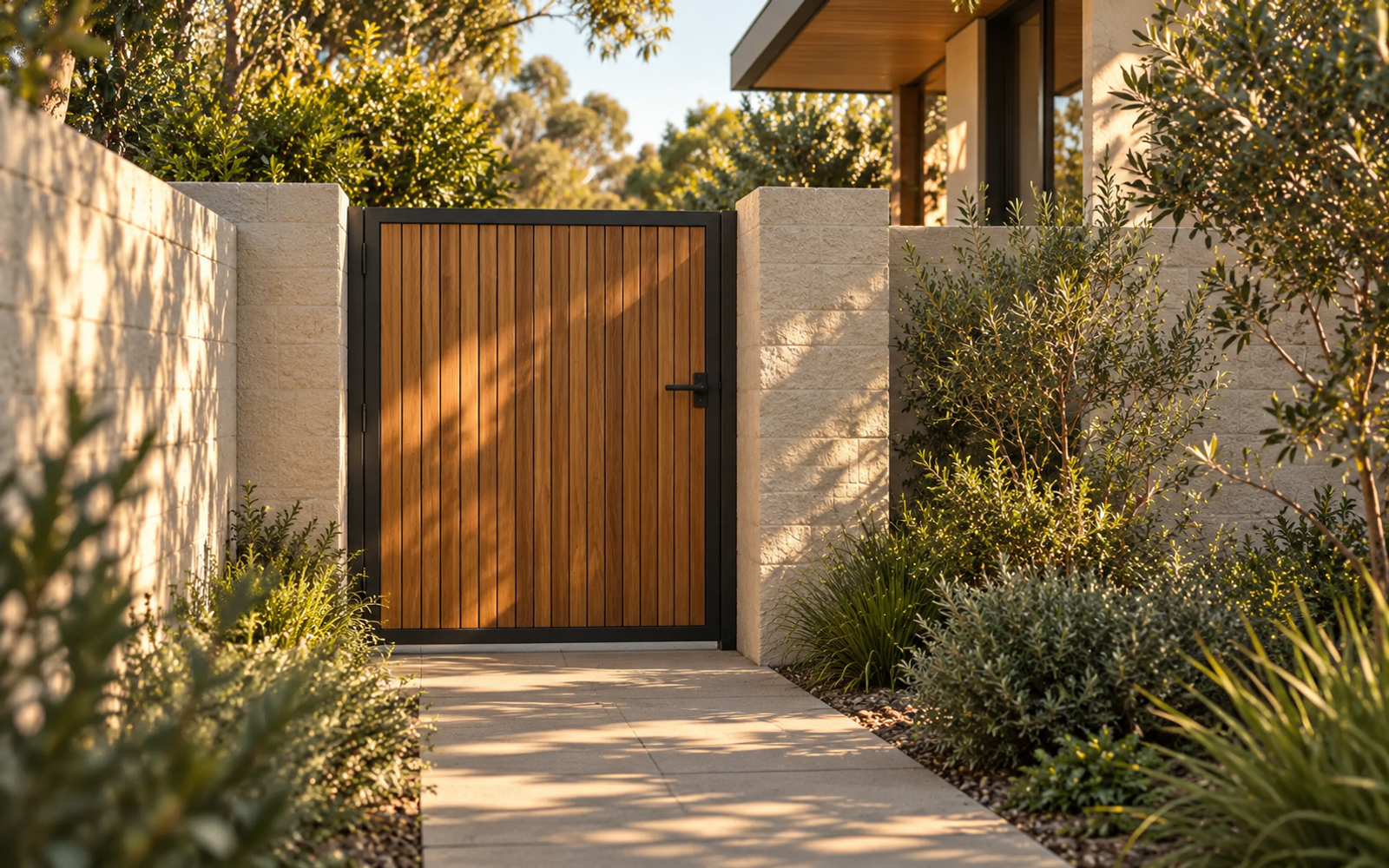
Driveway gates with pedestrian access
Keep an existing walking route if it suits the new gate layout, or assess a separate pedestrian entrance. Before using the vehicle opening on foot, have the installer confirm that the gate system permits pedestrian use and suits the property.
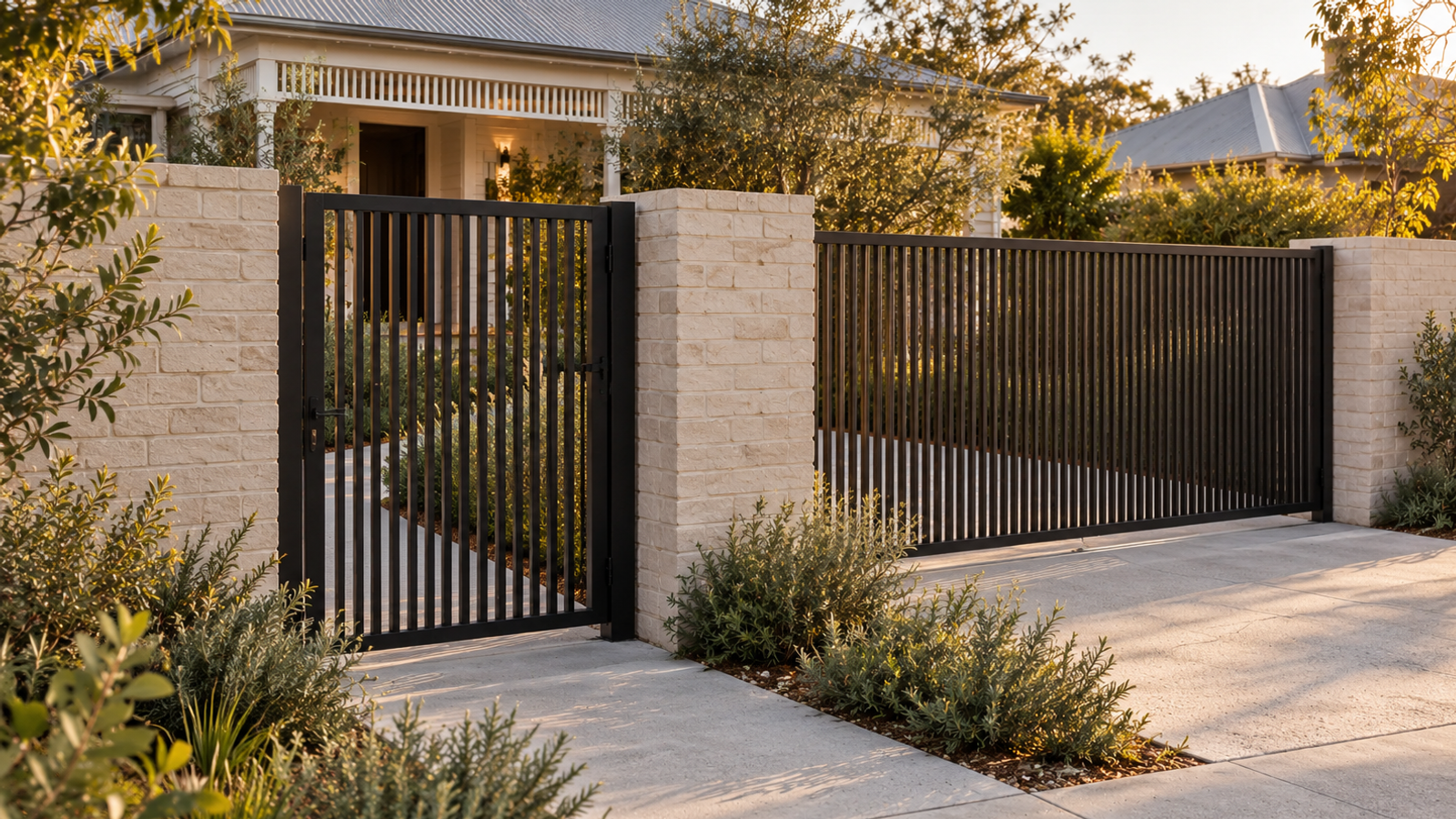
An existing pedestrian entrance may still suit the property when the driveway gate changes. We assess what can stay and how the new gate would work alongside it.
Start with the route you normally take from the street to the house. Include what you carry or bring through, as well as where you enter. The opening you use now may already do the job, or the new driveway gate may change how that route works.
Compare the three ways in
Keep the existing walking route
If your current pedestrian gate and path work well, start by including them in the plan as parts you want to retain.
The new driveway gate still needs assessment alongside them. A separate entrance beside a sliding gate, for example, needs consideration with the area the driveway gate travels into.
Keeping the route does not mean every existing post or connection can be reused. Have their suitability checked rather than assuming a new gate will fit the arrangement unchanged.
Check whether the vehicle opening is suitable
Do not assume an automatic driveway gate can double as a pedestrian entrance. The gate system's permitted use and safety requirements come first.
If you intend to walk through the vehicle opening, raise that before the gate and controls are specified. The installer must establish whether the actual system permits that use and whether the layout is suitable.
Where the system excludes pedestrians, keep or plan a separate walking entrance. A wide opening or a partial-opening setting does not, by itself, establish suitability.
Add a separate pedestrian entrance
A separate entrance gives people an opening of their own, rather than making the vehicle opening the normal walking route.
Compare where it would sit and how it would connect with the path to the house. Include the fence or wall section that would change and the parts you want to keep.
This adds another gate and entry arrangement to plan. It can be one defined change to the frontage, without assuming the entire fence needs replacing.
Separate the route from the controls
Choosing where people walk leaves another question: how will they get through the gate?
A pedestrian gate can be opened by hand. Releasing its latch and physically moving the gate are separate functions; remote release does not necessarily mean the gate opens itself.
Once the walking route is clear, use pedestrian gate locks and entry to compare how residents enter and visitors are admitted.
Fit the route around the driveway
Consider the walking route with cars in their normal parking positions. Include the proposed gate's movement and where it will sit when fully open.
A path that looks clear in an empty driveway needs checking against that everyday arrangement. Have the approach and entrance considered with the vehicle gate closed, moving and open.
Our sliding vs swing gates guide explains the movement and space questions in more detail.
If appearance matters across both entrances, compare what should match and what should stay. The driveway gate ideas examples can help describe the look without assuming the pedestrian gate must also be replaced.
Choose the route to assess
Bring a preferred route, even if the final position or controls still need advice. State which existing entrance you want to keep, which opening people would use and what you want changed.
If a proposal includes a new pedestrian gate, ask what it changes about that route. Compare it with keeping the current entrance before agreeing to a wider frontage change.
Use the enquiry form on our custom automatic gates page to discuss the driveway gate and the walking route you have in mind.